
9 September 2013

17 August 2013


10 July 2013


17 June 2013

6 June 2013




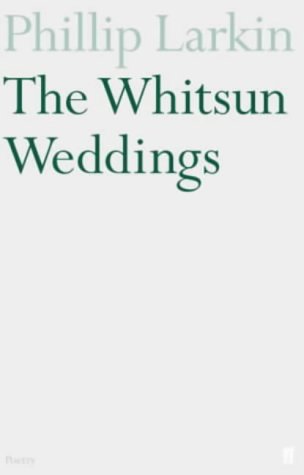

20 May 2013
#10 - Junky by William S Burroughs

'I think you'd like this,' Henry says as he passes me a book that at first sight, is about heroin addiction. 'Gee, thanks.' I think to myself.
'The Definitive Text of 'Junk'' is a non-fiction work written in such a straightforward style that makes you believe (in no uncertain terms) the two main facts about William S. Burroughs - one, that he is trained in anthropology, and two, that he shot his wife in the head.
The straight-up power of Burroughs' cold and analytical documentation of what it was like to be a drug addict in the 1950's leaves you rocking on your feet. Firstly, I don't know about you, but I never associated the titular 'Junk' with that time period. The way in which he strolls uncaringly through the bodies of contorted drug addicts gives you two impressions - largely, what it is like to live your life encircling one goal of getting a hit, and secondly that William S. Burroughs has got a screw loose.
Of course I go crazy for good journalism - whether it admits to being journalism or not, because trust me, much of the good stuff doesn't - but if you're trying to be open minded about life, this is the book to test your mettle. It reestablishes 'junk addiction' not as a crime but as an illness, and aids the reader in understanding - whether they agree with it or not - the way in which a sickness can control a human beings urges. Thanks Henry.
Pages: 124
Bottom Line: William S. Burroughs takes a lot of something and tells you all about how terrible it is. Then does it again.
#9 - Leviathan by Paul Auster

I discovered Leviathan a long while ago after I saw it referenced in a book dedicated to the history of photography. The conceptual artist Sophie Calle - a woman of many enigmas - was used by Auster in his sleek and intelligent novel as a basis for one of the main characters. In the one-line summary of the book I was hooked, and lined it up on my Amazon Wish List there and then.
A curious breed of thriller, biography and wonderful literary goodness; Leviathan is a book written in the way that makes you believe every word without even trying. Even where it rewrites history and tells you that people are famous, you go along with it and doubt everything apart from the tome before you. Written in a consciously experimental style, Auster writes in an intelligent but pacingly readable and entertaining way, with vivid and subtly brilliant characters who will carry you from explosive to start to the marvelous finish.
If you want something that can make you think whilst also being thoroughly entertained by a book that comes to life more so than much non-fiction, Leviathan makes for a wonderful romp through a world of explosions, genii, and the wonderfully offset couple of giant political themes matched with beautifully painted intimate relationships.
Pages: 200
Bottom Line: John Le Carré and Albert Camus have a wonderfully stylish lovechild. Explosions.
8 April 2013
#8 - The Illustrated Man by Ray Bradbury

Last year I was sad to learn that the author of my all-time favourite book Fahrenheit 451 and godfather of what we now know as the science fiction genre, Ray Bradbury, passed away. At the time I quickly purchased The Illustrated Man off of Amazon, as a sort of 'pouring one out for the literary homies' - and just this year, I got around to finally reading it.
It's crazy good, you guys. In terms of genius it's not another Fahrenheit 451, but for fans of Bradbury's flagrantly beautiful prose and cynically futuristic fables, it makes for a wonderful read, full of dark vignettes of sci-fi from the man who helped to form the genre as a means of exploring the biggest fears of society at any given time.
The best thing, for me, is the fact that Bradbury knew very little of science - this much is obvious to anyone who has read him before - and the way in which this only enhances the way in which he writes. Free from the boundaries of possibility, Bradbury's lucid imagination brings to life things in your mind that you could never have dreamed of before, in a manner so vivid and wonderful that no one person dreams the same dreams after reading. For example - everything that happens in the book, all the rockets and nuclear bombs and surreal androids, they all take place on the skin of a man with magical tattoos.
I'm not a huge fan of science fiction - more than most people, admittedly, but I'm not a die-hard fanatic - and I can see why a lot of people are turned off by it; but it stands as testament to Bradbury's magnificent skills as a writer that it doesn't matter how cynical you are about sci-fi, or how much of a realist you might think you are - his words will take a crowbar to your imagination and open it as wide as it will go.
Pages: 294
Bottom Line: A series of wonderfully painted vignettes from the godfather of science fiction.
Subscribe to:
Posts (Atom)